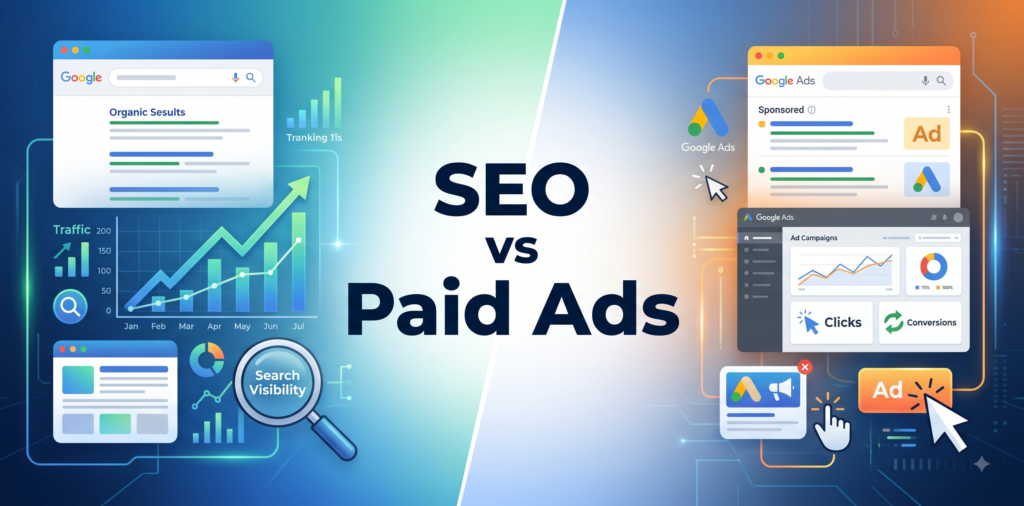
Imagine having two roads to reach the same destination: one takes time but keeps bringing visitors, while the other gets you there instantly—but at a cost. That is the simplest way to understand the difference between SEO and paid advertising.
Both strategies can drive traffic, generate leads, and increase sales. But knowing when and how to use each one can make a huge difference to your digital marketing success.
SEO: Building Long-Term Visibility
Search Engine Optimization (SEO) focuses on improving your website’s visibility in organic search results. By targeting relevant keywords, creating valuable content, optimizing website performance, and building authority, businesses can attract potential customers without paying for every click.
The biggest advantage of SEO is its long-term value. A well-optimized blog or landing page can continue bringing traffic months or even years after it is published. However, SEO usually requires patience because building rankings and authority takes time.
Paid Ads: Speed and Precision
Paid advertising, such as Google Ads and social media advertising, allows businesses to reach targeted audiences quickly. Marketers can select keywords, locations, demographics, interests, and other parameters to reach specific potential customers.
Paid ads are especially useful when launching a new product, promoting an offer, generating immediate leads, or entering a competitive market. However, once the advertising budget stops, the traffic generated from those campaigns can also decrease.
Why Not Use Both?
Instead of treating SEO and paid advertising as competitors, businesses can use them together. Paid ads can generate immediate traffic while SEO builds sustainable visibility over time.
Data from paid campaigns can also reveal high-performing keywords that may be valuable for SEO content.
Conclusion
There is no universal winner in the SEO vs. paid ads debate. SEO builds the foundation; paid advertising accelerates the journey. A balanced digital marketing strategy can use both to attract customers today while building organic growth for tomorrow.